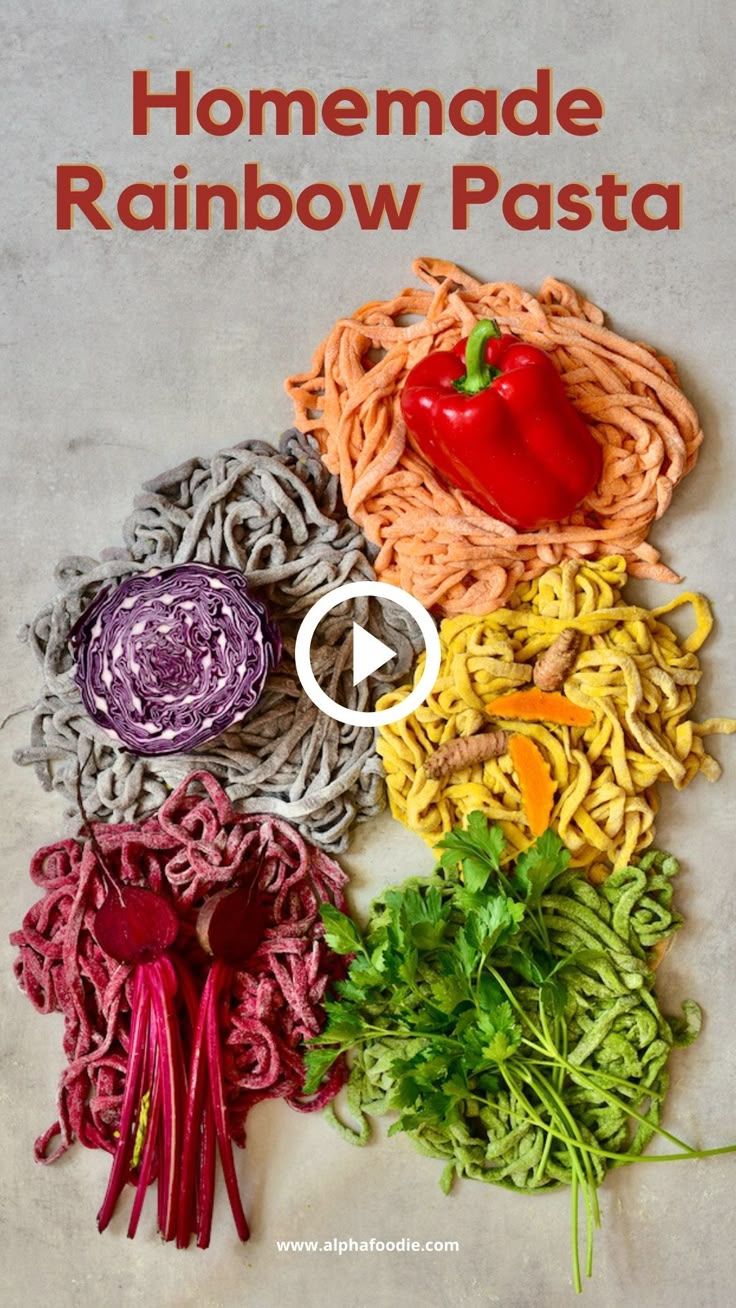
Simple Natural Rainbow Pasta: A Symphony of Colors, No Artificial Dyes Required
In a world increasingly seeking authenticity and wholesome goodness, the appeal of naturally vibrant food is undeniable. While rainbow-colored desserts have become commonplace, often relying on artificial food dyes, bringing that same captivating spectrum to savory dishes without compromise has been a delightful challenge. Imagine a plate of pasta, each strand a different, brilliant hue, born not from synthetic pigments but from the earth's bounty. This is the magic of
all natural homemade rainbow pasta – a culinary creation that delights the eyes, nourishes the body, and respects the integrity of your meal's flavor profile.
Making fresh pasta is an art form in itself, a meditative process that connects you to your food. Adding natural colors elevates this experience, transforming simple ingredients into an edible masterpiece. This comprehensive guide will walk you through crafting your own stunning rainbow pasta, proving that beauty and health can coexist harmoniously on your plate.
Why Choose Natural Colors for Your Pasta?
The allure of a rainbow on your plate is strong, but why go the extra mile to achieve it naturally? The answer lies in both health and culinary philosophy. While artificial food colorings are prevalent, particularly in sweet treats, their place in savory dishes often feels, well, *unnatural*. There's a subtle dissonance when a vibrant red pasta tastes vaguely of chemicals rather than the rich wheat and earthy undertones it should possess.
Opting for natural colorants from vegetables and spices offers several compelling advantages:
*
Purity of Flavor: Unlike artificial dyes, natural ingredients like beetroot, spinach, or red pepper impart their beautiful colors without altering the delicate taste of your pasta. In some cases, they can even add a subtle, complementary depth of flavor.
*
Nutritional Boost: By incorporating ingredients like spinach, carrots, or beetroot into your pasta dough, you're infusing your meal with extra vitamins, minerals, and antioxidants, turning a simple carb into a more nutrient-dense dish.
*
Appealing Aesthetics: There's a profound satisfaction in knowing the vibrant hues on your plate come directly from nature. This visual appeal enhances the dining experience, making food more appetizing and engaging for both children and adults.
*
Healthier Choice: For those conscious about artificial additives, natural colors provide peace of mind. You're controlling exactly what goes into your food, making it an excellent choice for anyone seeking a healthier, more transparent approach to cooking.
This commitment to natural ingredients is not just a trend; it's a return to wholesome, traditional cooking where the intrinsic beauty of food is celebrated.
Crafting Your All-Natural Homemade Rainbow Pasta Dough
Creating your own
all natural homemade rainbow pasta is a rewarding process, albeit one that requires a bit of time and patience, especially when tackling multiple colors. But trust us, the vibrant results are absolutely worth every minute.
The Foundation: Basic Pasta Dough
For each color of pasta you plan to make, you'll start with a variation of a simple dough. A good rule of thumb is 1 cup of 00 flour (or all-purpose flour) per serving. The liquid component will vary depending on whether you're using eggs or keeping it vegan.
*
Egg-Based Dough (for 1 serving/color): 1 cup (about 120g) 00 flour, 1 large egg.
*
Vegan Dough (for 1 serving/color): 1 cup (about 120g) 00 flour, 2-3 tablespoons water (or vegetable liquid from cooked ingredients) – adjust as needed. For extra binding, a flax egg (1 tbsp ground flaxseed mixed with 3 tbsp water, rested for 5 mins) can be used, though often plain water works well with the moist vegetable purees.
The process for each colored dough generally involves blending the liquid (egg or water) with your chosen natural coloring agent, then incorporating this vibrant mixture into the flour.
Unlocking Nature's Palette: Color-Specific Techniques
Here’s how to create a spectrum of stunning, natural hues for your pasta:
*
Red: The Earthy Vibrancy of Beetroot
For a deep, rich red,
beetroot is your best friend.
*
Method: Use 1 medium-sized boiled beetroot. Peel and chop it, then blend it with your egg or water until completely smooth. For a slightly softer red hue, you can also add some boiled carrots to the beetroot before blending.
*
Process: Mix the beetroot puree with your flour. Knead the dough vigorously until it forms a smooth, elastic ball. If it feels too wet, add a little extra flour, a teaspoon at a time. Too dry? A tiny splash of water. Wrap and let rest.
*
Orange: The Sunny Glow of Roasted Red Pepper
To achieve a bright, cheerful orange, roasted red peppers are ideal.
*
Method: Take 1 large red bell pepper. Roast it in the oven at 200°C (400°F) for 10-15 minutes until softened and slightly charred. Remove the skin and seeds, then blend the roasted flesh with your egg or water until smooth.
*
Process: Red peppers have high water content, so you’ll likely need to add a bit more flour as you blend and knead to prevent stickiness. Aim for a firm, non-sticky dough.
*
Yellow: Golden Hues from Turmeric or Saffron
For a sunny yellow, you have a couple of options:
*
Method 1 (Turmeric): For a simple, vibrant yellow, add 1-2 teaspoons of ground turmeric directly to your flour before adding the egg or water. Mix thoroughly.
*
Method 2 (Saffron): For a more delicate, perfumed yellow (and a touch of luxury), steep a pinch of saffron threads in a tablespoon of warm water or milk for 10-15 minutes, then add this liquid (and the threads) to your dough.
*
Process: Blend or mix as usual. Turmeric pasta can have a subtle earthy flavor, while saffron is more floral.
*
Green: Freshness from Spinach or Parsley
Achieve a vibrant green with leafy greens.
*
Method: Use 1 cup of fresh spinach or parsley. Blanching spinach briefly (30 seconds in boiling water, then an ice bath) can help intensify the color, or you can blend it raw with your egg or water. Ensure it's very well drained if blanched.
*
Process: Blend the greens with your liquid until a fine puree forms, then incorporate into the flour. Knead until smooth. Both spinach and parsley yield beautiful greens, with parsley often providing a slightly brighter hue. For more in-depth exploration of green pasta, check out
Homemade Rainbow Pasta: All-Natural Colors From Veggies.
*
Blue/Purple: The Magic of Red Cabbage or Purple Potatoes
This is where natural colors get truly exciting, as red cabbage can produce both purple and blue!
*
Method: For purple, use 1 cup of boiled red cabbage. Blend it with your egg or water. For a surprising blue hue, add a small pinch of baking powder (about 1/4 teaspoon) to the boiled red cabbage puree before blending. The baking powder changes the pH, shifting the anthocyanins from purple to blue. Alternatively, 1-2 baked purple potatoes, peeled and mashed, offer a lovely lavender/purple.
*
Process: Blend and knead as with other colors. Observe the fascinating color transformation with the baking powder!
*
Black: Dramatic Contrast with Activated Charcoal
While not a rainbow color, black pasta offers a dramatic contrast that truly makes the other colors pop.
*
Method: Add 1-2 teaspoons of food-grade activated charcoal powder directly to your flour.
*
Process: Mix the charcoal thoroughly with the flour before adding your egg or water. Knead until the dough is uniformly black. Activated charcoal is flavorless, making it perfect for aesthetic impact.
After preparing each batch of colored dough, wrap it tightly in plastic wrap and let it rest at room temperature for at least 30 minutes. This resting period allows the gluten to relax, making the dough much easier to roll. If you’re making your pasta ahead of time, the dough can be refrigerated for a day or two; just bring it back to room temperature before rolling.
Rolling, Cutting, and Cooking Your Vibrant Masterpiece
With your array of beautiful, naturally colored doughs rested and ready, the next step is to transform them into glorious pasta strands.
*
Rolling the Dough: If you own a pasta roller, this is the most efficient method. Start by flattening a portion of dough with a rolling pin, then feed it through the widest setting of your pasta machine. Fold the dough in half, lightly flour it, and repeat this process several times until the dough is smooth and uniform. Gradually reduce the machine's settings, passing the dough through each one until it reaches your desired thickness (usually setting 5 or 6 for most pasta types). Lightly flour the dough often to prevent sticking.
*
Hand-Rolling Alternative: Don't have a pasta machine? No problem! Use a strong rolling pin on a lightly floured surface. Roll the dough as thinly as possible, rotating it frequently to ensure even thickness.
*
Cutting the Pasta: Once the sheets are rolled, you can use your pasta machine's cutter attachments for spaghetti, fettuccine, or tagliatelle. For unique shapes or if cutting by hand, dust the sheet with a little flour, loosely roll it up, and slice into strips of your desired width. Unroll the strips immediately and arrange them on a lightly floured baking sheet or hang them on a pasta drying rack to prevent sticking.
*
Drying (Optional): Fresh pasta can be cooked immediately. For longer storage, you can let it air dry for a few hours until firm, or overnight until brittle, before storing in an airtight container.
*
Cooking: Bring a large pot of salted water to a rolling boil. Add your fresh pasta, cooking in batches if necessary to avoid overcrowding. Fresh pasta cooks much faster than dried, typically in 2-4 minutes, depending on thickness. It’s ready when it floats to the surface and is al dente. Drain and toss immediately with your favorite sauce.
For those interested in exploring more vegan-friendly pasta options and how to achieve such vibrant hues without compromise, you might find this article particularly inspiring:
Vibrant Vegan Pasta: Craft All-Natural Rainbow Hues.
Tips for Success and Creative Variations
*
Dough Consistency is Key: The biggest challenge is often getting the dough consistency right. It should be firm, smooth, and only slightly tacky, not sticky. If it's too sticky, add flour gradually; if too dry and crumbly, add a few drops of water.
*
Prevent Drying: Always keep the dough you're not actively working with wrapped tightly in plastic wrap or under a damp cloth to prevent it from drying out.
*
Experiment with Shapes: Beyond traditional cuts, consider making lasagna sheets, ravioli, tortellini, or even charming farfalle (bow ties) with your colored doughs. The visual impact of these shapes in a rainbow array is stunning.
*
Sauce Pairings: Let the pasta be the star! Opt for simple sauces that won't overpower the natural colors, such as a light olive oil and garlic sauce, a fresh pesto, or a simple butter and herb dressing.
*
Storage: Fresh pasta can be refrigerated for 2-3 days, or frozen for up to a month. If freezing, arrange it in single layers on a baking sheet until solid, then transfer to a freezer-safe bag. Cook from frozen directly in boiling water.
Embrace the Rainbow!
Creating
all natural homemade rainbow pasta is more than just a recipe; it’s an experience. It’s an opportunity to connect with your food, to appreciate the simple beauty of nature’s palette, and to present a dish that truly delights on every level. From the vibrant reds of beetroot to the verdant greens of spinach, each strand tells a story of wholesome ingredients and thoughtful preparation. So roll up your sleeves, embrace the colors, and prepare to impress with this spectacular, artificial-color-free culinary masterpiece!